

Introduction
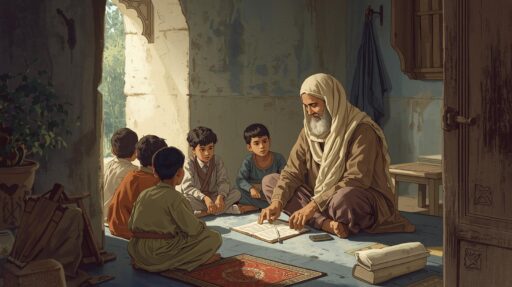
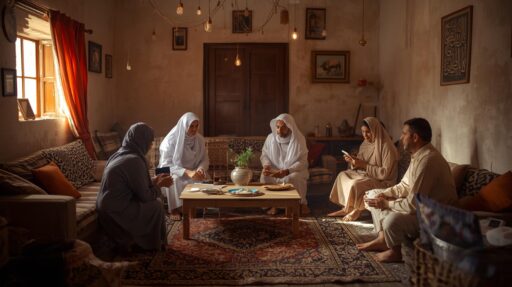
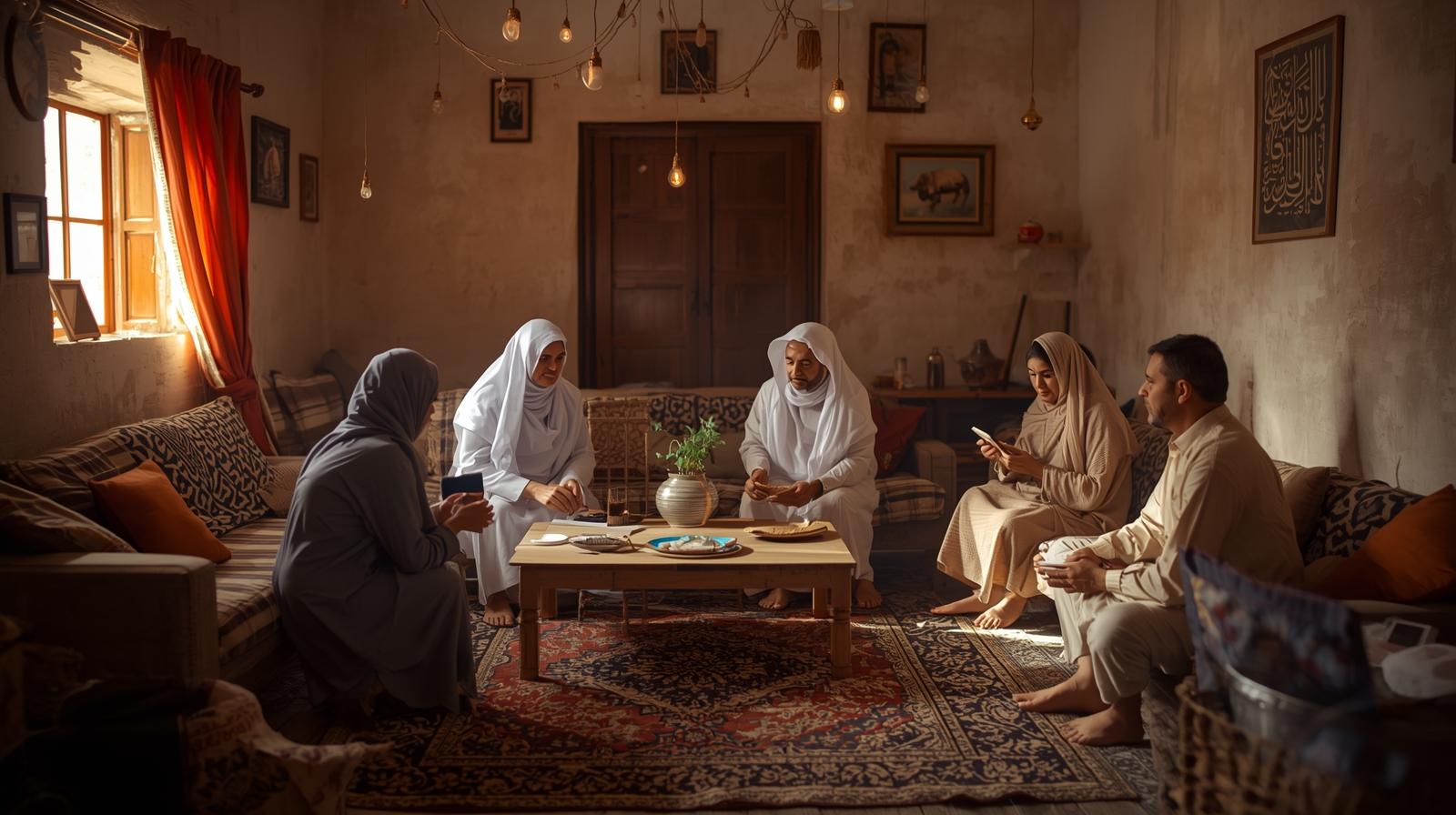
Before the era of formal schools and standardized curricula, education in the UAE was a holistic, lifelong process that occurred organically within the family and community. The most important classroom was the home, and the most impactful teachers were parents, grandparents, and elders. This informal but highly effective educational system was centered around the concept of “Al Ghorfa,” which translates simply to “the room,” but symbolically represents the heart of the home where daily life, work, and learning were inseparable. In the Al Ghorfa, children didn’t just learn facts; they learned the essential life skills, values, and crafts that would enable them to survive and thrive in their specific environment.
The Curriculum of Daily Life: Gender-Based Roles and Skills
The learning in the Al Ghorfa was practical and immediately relevant, divided along the lines of gender roles that defined the traditional division of labor. For boys, the “curriculum” was taught by their fathers and uncles. It involved skills essential for providing for the family: how to care for camels, including feeding, watering, and treating common ailments; the basics of falconry; how to set fishing nets or navigate a dhow for coastal communities; and the techniques of date palm cultivation and aflaj irrigation in the oases. For girls, the education from their mothers and grandmothers was equally comprehensive. They learned the intricate art of Al Sadu weaving, the preparation of traditional foods like harees and lugaimat, the application of henna, the skills of managing a household, and the care of younger siblings.
The Transmission of Values: More Than Just Practical Skills
The Al Ghorfa was not just a vocational school; it was the primary site for the transmission of cultural and moral values. As families worked together, elders would share stories, proverbs, and poetry. They would model and explicitly teach the core Bedouin and Islamic values of hospitality (diyafa), respect for elders, honesty (amanah), courage (shuja’a), and patience (sabr). A child learned the importance of sharing water not from a textbook, but by watching their father offer the last of their drinking water to a guest. The lessons of resilience were learned by enduring a sandstorm together; the lessons of cooperation were learned by the entire family working to set up or take down a desert camp.
The Master-Apprentice Model: Learning by Doing
The pedagogical method was pure “master-apprentice.” There were no lectures or written exams. Learning was kinaesthetic and observational. A girl would sit beside her mother for hours, watching her fingers work the loom before being given a small section to try herself. A boy would accompany his father on a fishing trip long before he was trusted with a net of his own. Mistakes were expected and corrected patiently through demonstration. This method ensured that complex, nuanced skills—from judging a camel’s health by the look in its eye to knowing the exact consistency of date syrup—were passed down with precision and preserved across generations.
The Modern Legacy: The Spirit of Al Ghorfa in a Digital Age
While the physical context of the Al Ghorfa has changed dramatically with modern housing and technology, its spirit endures in contemporary Emirati education. The UAE’s focus on experiential learning, hands-on STEM activities, and heritage workshops in schools is a modern echo of this traditional model. Furthermore, the strong emphasis on family and respect for elders in Emirati society ensures that informal learning at home continues. Grandparents still play a vital role in teaching children traditional poetry, stories, and customs. The value of this intergenerational knowledge transfer is increasingly recognized as a crucial counterbalance to the rapid pace of modernization, ensuring that the soul of the culture is not lost.
Conclusion: The First and Most Enduring Classroom
The Al Ghorfa represents the original, authentic education system of the UAE—a system that was perfectly adapted to its time and environment. It was sustainable, effective, and deeply meaningful. It produced self-sufficient, resilient, and culturally grounded individuals. In today’s world of AI and global connectivity, the specific skills taught in the traditional Al Ghorfa may have evolved, but its core principles remain vital: that the most important lessons are often learned outside of formal institutions, that wisdom is passed down through doing and storytelling, and that the family remains the first and most enduring classroom for building character and identity.