


Introduction
The dawn of the oil era in the UAE brought with it a monumental challenge: how to educate a population that was largely nomadic, scattered across a vast and unforgiving desert. Building stationary schools in cities was one thing; reaching the children of the Bedouin in the remote interior (bedu) was another. The solution was as innovative as it was compassionate: the “Education Caravans” (Qawafil al-Ta’lim). This was a bold, mobile-school initiative launched in the 1960s and 70s that represented the young federation’s unwavering commitment to leaving no child behind, bringing the light of learning directly to the heart of the desert.
The Mobile Classroom: Tents, Trucks, and Determined Teachers
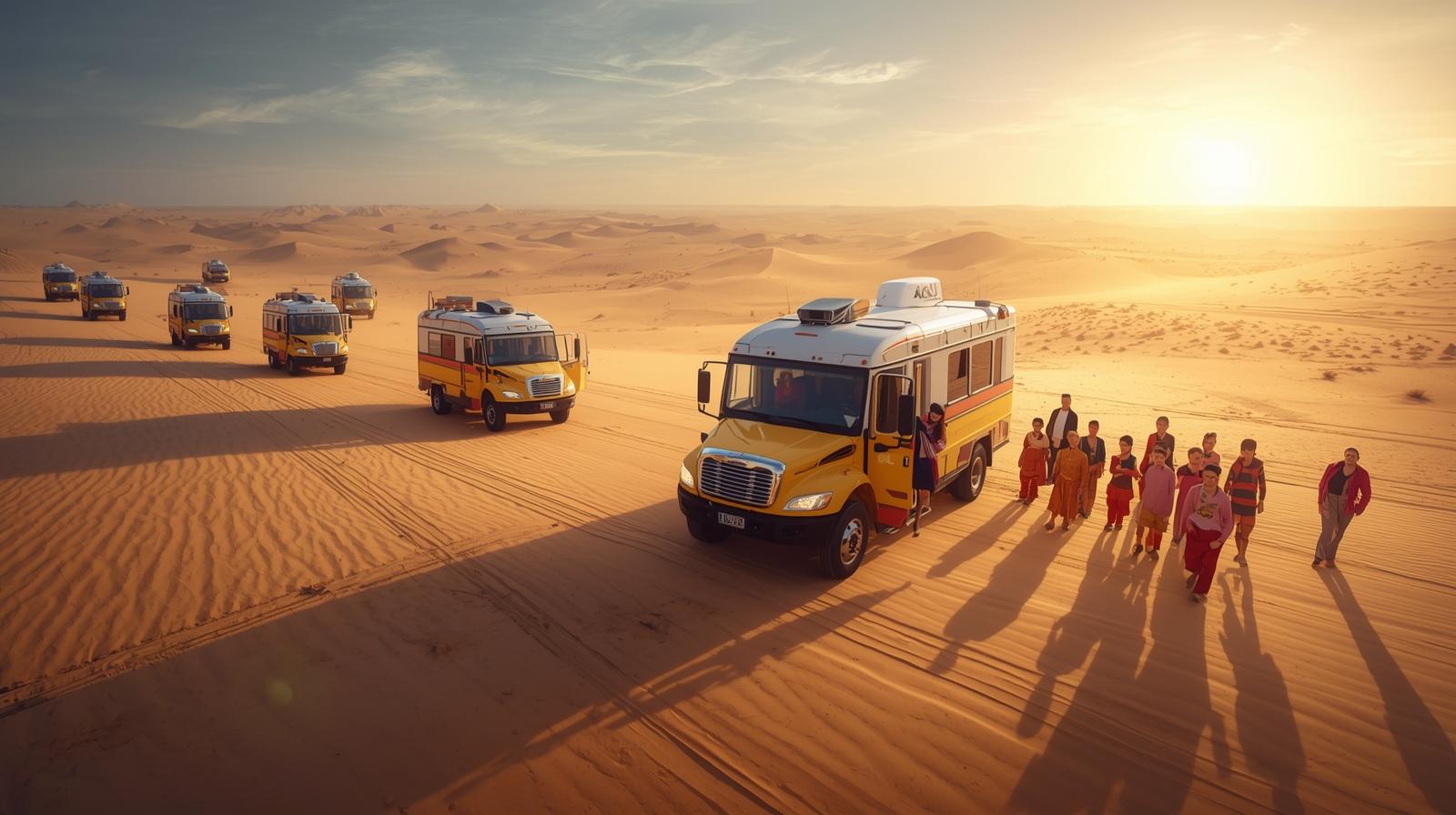
An Education Caravan was a traveling unit that would set up a temporary school in a desert settlement for a period of several months. The “schoolhouse” was often a large communal tent, provided by the local community or the government. The caravan was equipped with the bare essentials: blackboards, chalk, textbooks, mats for the students to sit on, and basic supplies. Reaching these locations required rugged vehicles and drivers who knew the desert tracks. The caravans would move from one nomadic settlement to another, following seasonal patterns and water sources, ensuring that education was woven into the rhythm of Bedouin life rather than disrupting it.
The Vanguard of Knowledge: The Teachers of the Caravans
The true heroes of this endeavor were the teachers. These were often young, pioneering educators from coastal cities like Dubai, Sharjah, or from other Arab countries like Egypt and Palestine, who volunteered for this demanding service. Life on the caravan was arduous. They faced extreme heat, sandstorms, isolation, and a lack of modern comforts. Their mission, however, was a sacred one. They were not only teaching reading, writing, and arithmetic; they were ambassadors of the modern world and the unifying vision of the nascent UAE. They had to be resourceful, culturally sensitive, and deeply patient, building trust with communities that were initially wary of this new form of institutionalized learning.
Curriculum and Community: More Than Just Lessons
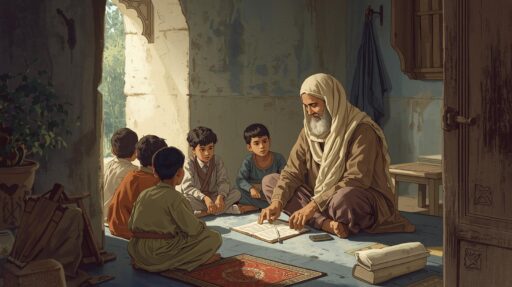
The curriculum in the caravans was a simplified version of the formal school syllabus, focusing on foundational literacy in Arabic and basic mathematics. However, the education was holistic. The teachers also introduced concepts of health, hygiene, and civic awareness. The caravans often became a community hub. In the evenings, the teachers would hold literacy classes for adults, many of whom had never held a pen. This approach helped gain the support of the entire community, demonstrating that education was a benefit for all, not an imposition on the young. The school tent became a symbol of hope and progress under the vast desert sky.
The Legacy: Bridging the Gap to a Settled Future
The Education Caravans played a critical role in one of the most significant social transformations in the UAE’s history: the settlement of the Bedouin. By providing education in the desert, the government showed a genuine commitment to the well-being of its nomadic citizens. As the state built permanent housing and infrastructure in the interior, the caravans paved the way for the establishment of permanent schools in towns like Al Ain, Liwa, and the Western Region. The children who learned their letters in a dusty tent were often the first in their families to later graduate from a concrete schoolhouse and eventually from universities. The caravans ensured that the Bedouin population was not left on the sidelines of the nation’s rapid development but were integrated as full, educated citizens.
Conclusion: The Moving Schools That Built a Nation
The story of the Education Caravans is a poignant and powerful chapter in the UAE’s history. It is a testament to the visionary leadership that understood that a nation could not advance with only a literate coast and an illiterate interior. This mobile-school initiative was a massive logistical and pedagogical undertaking driven by an unwavering belief in the right to education for every child, no matter how remote their home. The caravans were more than just schools on the move; they were the vehicles that carried the values of unity, progress, and knowledge into the deepest reaches of the desert, ensuring that the foundation of the modern UAE was built upon the education of all its people.